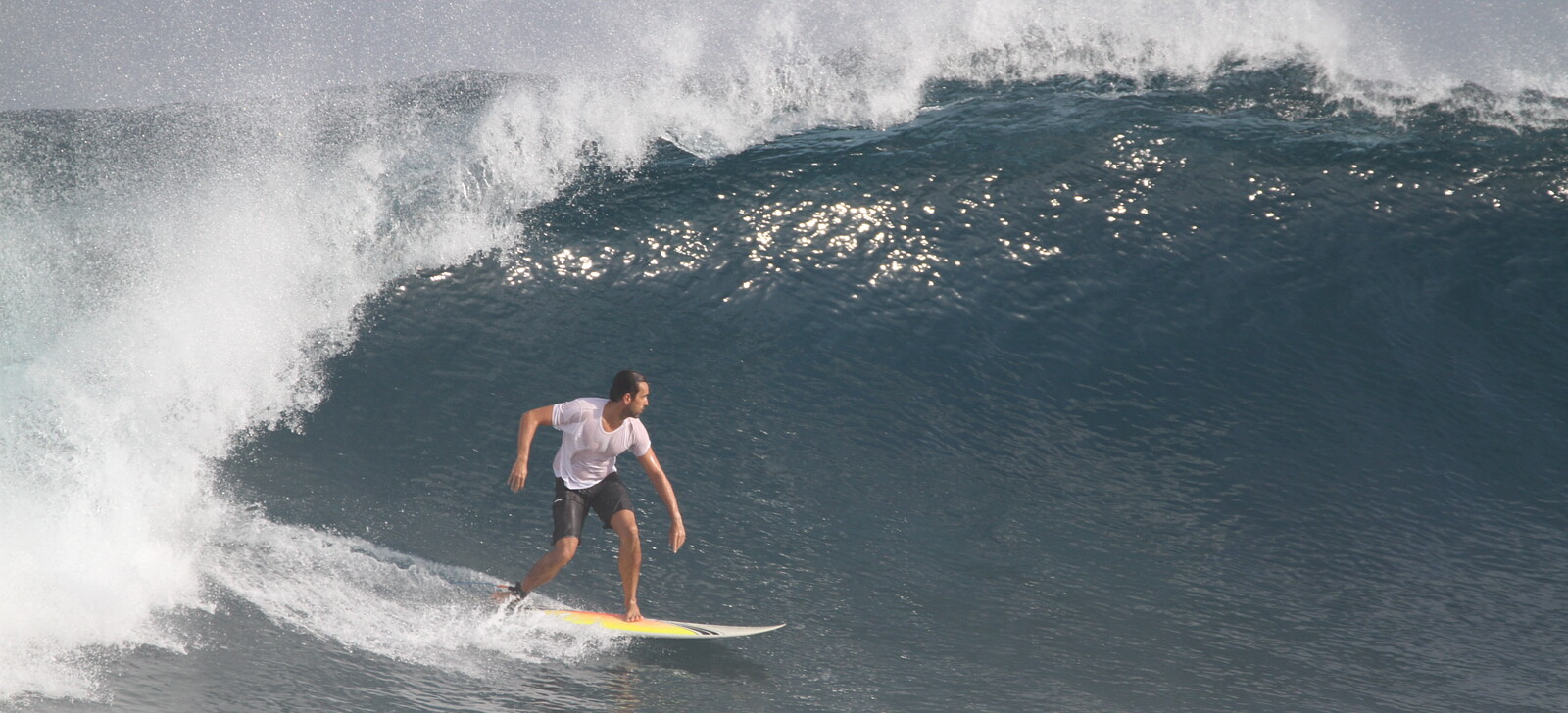
Best Months To Surf Krui South Sumatra
The Indonesian surf seasons align with the Australian-Indonesian Monsoon cycle. Peak season coincides with the Southeast Monsoon April to September (Dry Season), off season with the Northwest Monsoon October to April (Wet Season). The 2 transitional periods March to May and September to November coincide with the shoulder seasons.
If you want to enjoy consistent swell and favourable wind directions on the South West Coast of mainland Sumatra plan your trip between mid May to end August. All other months are risky. Could be OK, could be flat for weeks but it's almost certain it will not be epic except for maybe one week per month.
| Jan to Apr Off Season | January, February and March are dominated by onshore winds, small confused swells and rain. Traveling accross the world to surf South Sumatra during these months is extremely optimistic. China's Olympic surf team arrive at Ujung Bocur / Karang Nyimbor in February. | |
| Apr to Jun Shoulder Season | Wind conditions begin improving by mid April however swell quality and consistency remains extremely poor. Expect one to two decent lined up swells a month with 1 week long flat spells. Conditions start improving as the crowds start arriving in May. China's Olympic surf team are based at Ujung Bocur / Karang Nyimbor into July. | |
| Jun to Sep Peak Season | During the southern hemisphere winter the Great Southern Ocean sends 1 large long lasting swell every 11 days towards the Sumatran coast. Offshore winds make this the best time to score 1.8 mtr plus surf at Krui Left, The Peak, Ujung Bocur and Way Jambu. By July the crowds are pouring into the area. Expect crowds of 75+ at Ujung Bocur, 40+ at Krui Left and 35+ at Way Jambu. | |
| Sep to Nov Shoulder Season | Crowds start dropping off and rainy days begin increasing in late September. Conditions usually begin really falling apart in October. | |
| Nov to Jan Off Season | The worst of the rainy season. Come November you can expect onshore winds and rain for weeks. Many tourist related businesses close down. The only surfers remaining are those that didn't do their research or can't leave. |
South Sumatra is not Java, Bali or the Mentawais
Surfers visiting the Krui area are often mystified when the surf in Bali, Java and the Mentawais is pumping on the same day the surf around Krui is small or even flat. A map of Indonesia, understanding the South Easterly trade winds and the predominant swell direction quickly removes this mystery.
South Westerly Facing Coastline
The coastline of South Sumatra faces south west with most of the major surfbreaks on the north side of headlands.
Predominant Swell Direction
The predominant swell direction is S to SW. A more southerly swell direction places many breaks in a swell shadow. This is why Krui Left, Krui Right, The Peak and Leftovers are often flat even during peak season and Ujung Bocur is often breaking wide and sectioning.
Trade Winds
The trade winds across Indonesia are produced by the Australian-Indonesian Monsoon system. The further west and north one goes the more the winds taper off in strength and become affected by other climate drivers.
Southeast Monsoon - April to October
During the Southeast Monsoon the winds are moderate and quite variable blowing north east to southerly (offshore to crossshore at most surf breaks).
Northwest Monsoon - October to April
During the Northwest Monsoon the winds are predominantly from the west (onshore at all surfbreaks).
El Niño-Southern Oscillation
Being one of the main drivers of the south easterly trade winds the El Niño-Southern Oscillation (ENSO) can have dramatic effects on the quality of surf in Sumatra. Wind conditions are more predicatable during an ENSO-neutral phase when regional monsoon cycles dictate the weather without disruption.
Neutral ENSO phase
A ENSO-neutral phase is the baseline for surf conditions in Indonesia. With less impact from tropical climate forces the Southern Ocean storm track fluctuates between a positive (southward) and negative (northward) phase. These phases typically last a few weeks at a time with fewer extreme peaks and less deep flat periods. Australian surfers serious about scoring the best surf will arrive during a negative (northerly) phase and leave when the phase switches.
El Niño phase
El Niño phases usually produce the best surf with drier conditions and favourable trade winds. The Southern Ocean storm track shifts equatorward and strengthens resulting in more quality swells reaching the Sumatran Coast. September can be magic on the South West Sumatra coast during an El Niño phase.
La Niña phase
La Niña phases are more fickle and inconsistent with 20 - 40% wetter conditions and weaker south east trade winds. The Southern Ocean storm track shifts southward resulting in weaker swells that often dissipate before reaching the Sumatran coast. A shoulder season surf trip is far riskier during a La Niña phase.
Wind Direction Frequency South West Sumatra
It's true that ocean swells hit South West Sumatra's coast all year round. However the swell quality and surfable waves produced are dependant on wind direction. Checking the wind direction frequency during the three ENSO phases may help when planning your South Sumatra surf trip.
The Bottom Line
Krui is not Bali, Java or the Mentawais so don't plan your Krui surf trip based on experiences in those locations. For the Krui area to light up requires SW swells and NE to SE winds. Those conditions occur more consistently during the peak season June to September. Shoulder months April, May, August and September can suffer 2 week long flat spells. La Niña years often produce poorer surf conditions.
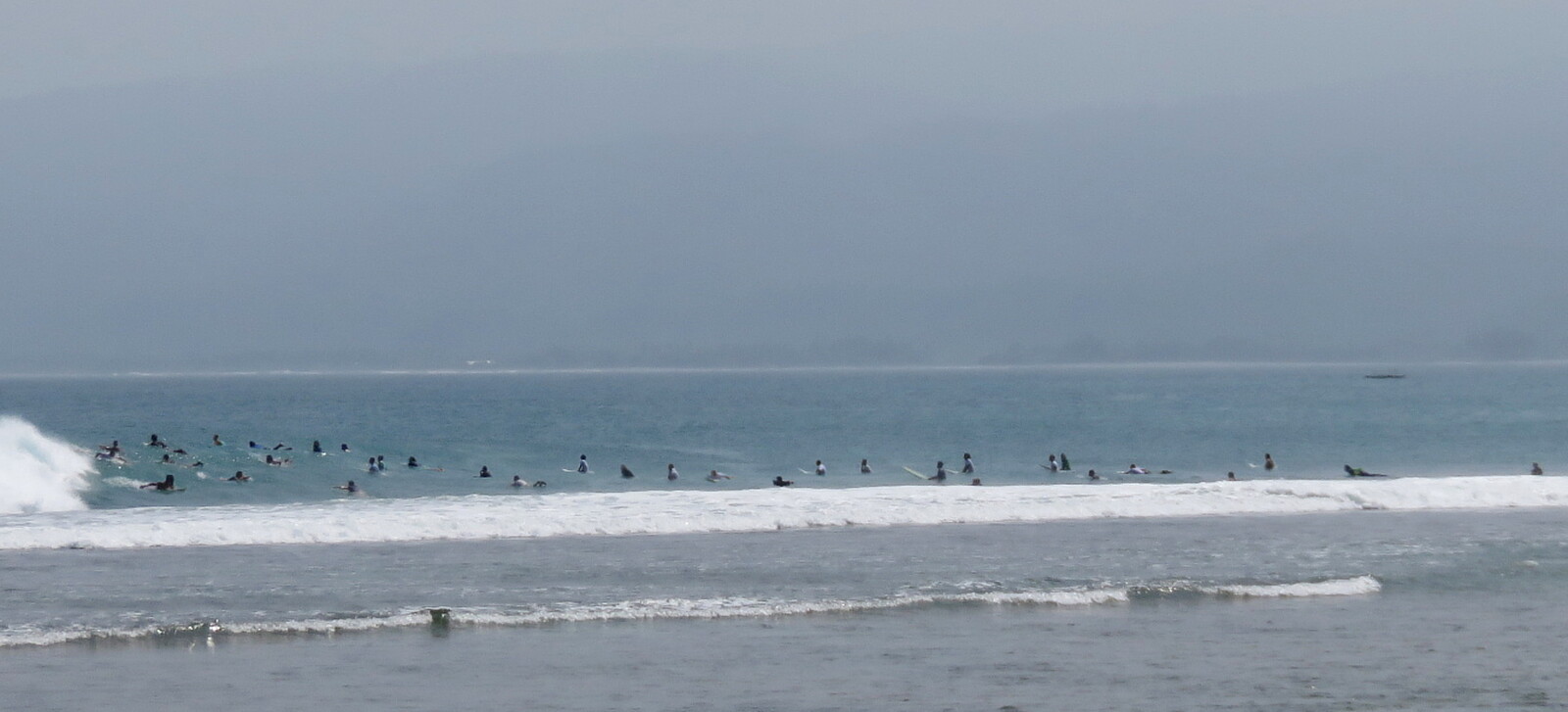
 If you're looking out over a surbreak in the Krui area and wondering why the surf forecast is so unreliable ... guess no more. “Real” weather information coverage is currently less than 1% of the Earth's surface with very few ocean based stations or bouys. There are no wave bouys in the Indian Ocean any where near the South Sumatran Coastline. The swell is predicted by using global wave models that oversimplify the complex nature of the ocean. With no local inshore observational data fed back into the system you can't trust the surf forecast in this part of the world.
Don't hang around waiting for “The” swell to arrive, get out and surf what's there.